

In a hand knotted rug, the most important work is often the least visible. While patterns and colors draw attention, it is the knotting that determines how a rug will perform, age, and endure over time.
Knotting is not decorative. It is structural. Each knot represents a deliberate action, repeated thousands of times, forming the foundation of the rug long before its design fully emerges.
What Knotting Means in Rug Making
In hand knotted rugs, individual knots are tied around vertical warp threads. Once a row is complete, horizontal weft threads are passed through to secure the structure. This process is slow by necessity and consistent by design.
These techniques developed from practical needs. Rugs were made to withstand daily use, changing climates, and long periods of wear. Over time, regional approaches to knotting became established traditions, shaped by materials, environment, and use.
1. Turkish Knot
The Turkish knot, also known historically as the Ghiordes knot, is a symmetrical knot that wraps evenly around two warp threads.
Its balanced construction creates a strong and stable pile. This knot is commonly found in Anatolian, Caucasian, and many village rugs, where durability and even wear were essential. Rugs woven with Turkish knots tend to wear evenly and maintain their structure over time.

2. Persian Knot
The Persian knot is an asymmetrical knot historically associated with the city of Senneh, which is why it is sometimes called the Senneh knot. In this technique, the yarn wraps fully around one warp thread and passes loosely around the adjacent warp.
This structure allows for greater flexibility in design, supporting fine lines, soft curves, and intricate compositions. The Persian knot is widely used in Persian and Indo Persian rugs where visual detail is a defining feature.
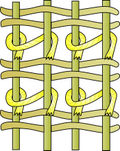
3. Open and Closed Knot Variations
Both Persian and Turkish knots can be tied in open or closed forms. In closed knots, the yarn ends emerge tightly between the warp threads, producing a denser appearance. In open knots, the ends emerge more freely, allowing for a softer surface and greater design flexibility.
These variations influence texture and clarity rather than representing separate knotting techniques.

4. Tibetan Knot
The Tibetan knot follows a distinct method. Yarn is looped around a temporary rod placed in front of the warp threads and then cut to form the pile.
This technique produces a uniform and slightly raised surface and is traditionally used in Tibetan rugs. While visually refined, it reflects a different structural approach from Turkish and Persian knotting.

5. Spanish Knot
The Spanish knot is one of the earliest known pile knotting techniques. It involves tying the yarn around a single warp thread rather than two.
Historically used in parts of Spain and North Africa, it is rarely seen today but remains important in understanding early developments in rug construction.
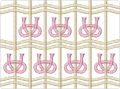
6. Rya Knot
The rya knot is a long pile knot traditionally used in Scandinavian rugs. Unlike other knotting techniques that aim for a dense, even surface, the rya knot creates a loose and elongated pile.
Originally designed for insulation in cold climates, rya rugs prioritized warmth over surface detail. The knotting technique reflects this purpose, resulting in a textured and tactile surface that feels markedly different from traditional Oriental rugs.

7. Jufti Knot
The jufti knot is tied around four warp threads instead of two. It appears across various regions when speed and efficiency were prioritized.
While functional, this technique reduces knot density and affects long term durability. It is best understood as a production choice rather than a marker of craftsmanship quality.

Knot Density and Quality
Knot density is often referenced as an indicator of quality, but it should not be considered in isolation.
A rug with moderate knot density, strong wool, and consistent tension can outperform a finer rug made with inferior materials. Quality emerges from the relationship between technique, material, and execution.
Why Knotting Remains Relevant
In contemporary markets, rugs are frequently evaluated based on appearance alone. Knotting requires closer inspection and informed understanding.
Ultimately, knotting determines how a rug will respond to use and time. It influences texture, durability, and the way a rug settles into a space over years of living.